Newsletter
Join the Community
Subscribe to our newsletter for the latest news and updates
2025/10/07
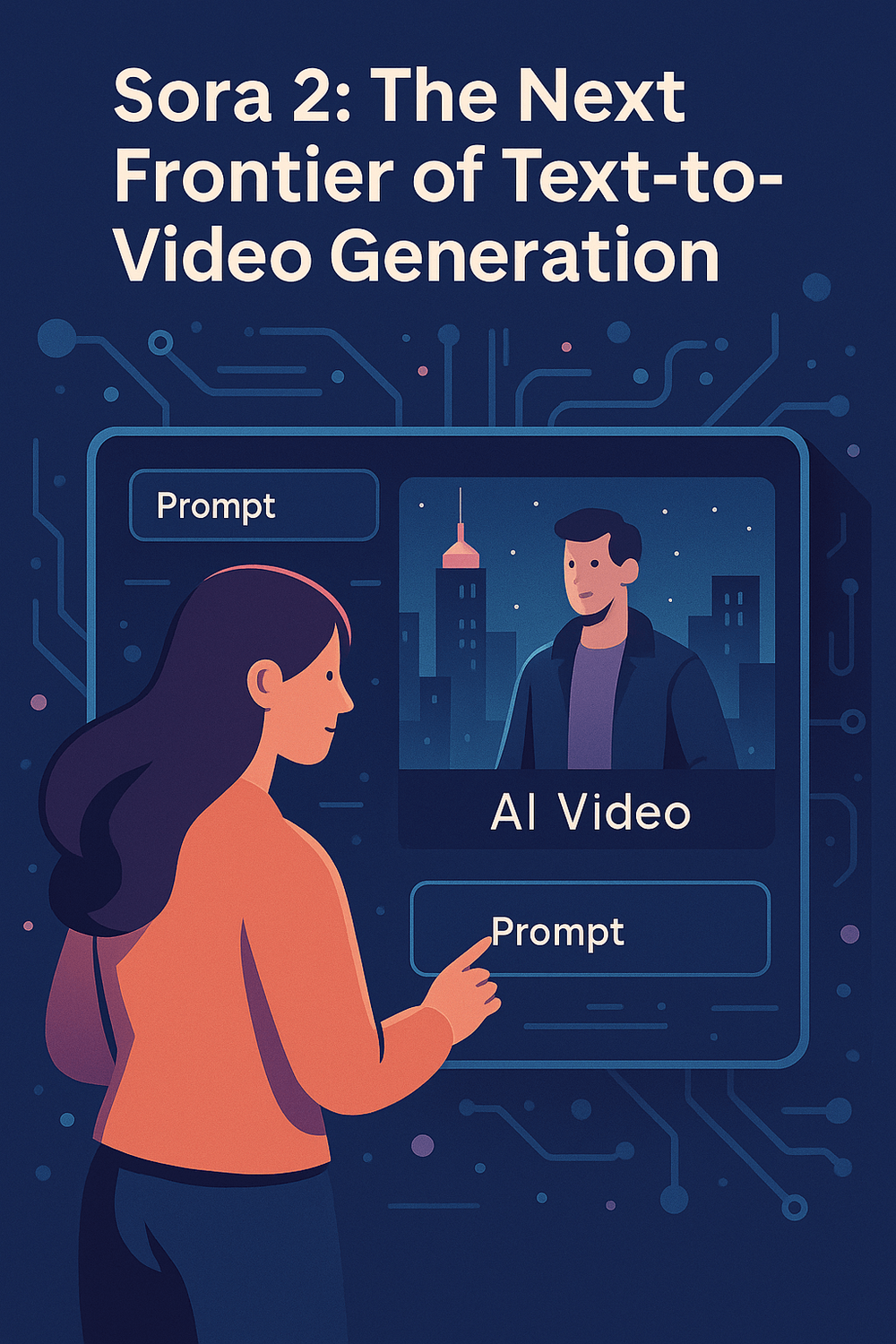
With the release of Sora 2, OpenAI takes a bold leap in generative AI—transforming the way we think about video creation. No longer is video production limited to cameras, actors, and editing suites. Now, a simple text prompt (or a short cameo video) can spawn visually rich, dynamic scenes with synchronized audio, motion, and composition.
This marks a turning point: just as ChatGPT made conversational text generation widely accessible, Sora 2 aims to make video generation equally approachable.
In short, Sora 2 is not just an incremental update—it aims to cross several key technical thresholds that earlier models struggled to clear.
One of the most exciting features is cameos: users can record a short video + audio of themselves (or a subject) once, and then reuse that “avatar” in future videos. The model can insert that avatar into new scenes in coherent ways.
This opens possibilities: imagine “placing yourself” into a fantasy scene, sci-fi setting, or historical reenactment, without needing to film anything new.
Accompanying Sora 2 is a mobile app designed with a vertical, swipeable feed—very much like TikTok or Instagram Reels. The idea is to treat generated videos as consumable content, not just isolated outputs.
Users can scroll through AI-generated content, remix prompts, and engage with the community. The app also includes identity verification and notification systems: when someone uses your likeness, you may be notified.
Sora 2 has broad potential across creative, commercial, and social domains.
However, Sora 2 is not yet a full replacement for high-end filmmaking, especially for long, high-resolution, or heavily edited narratives.
With powerful generative video come serious responsibilities. Here are key concerns:
Because users can embed themselves or others into scenes, there’s risk that deepfake content is produced and misused (for impersonation, defamation, misinformation). Detection and regulation will be critical.
Sora 2 could generate visuals or scenes inspired by existing films, characters, or styles. Who owns the output? What rights do original creators retain? OpenAI is reportedly working on giving rights holders more control.
Viewers may not always detect that a video is AI-generated. Labeling, watermarking, and metadata disclosure (e.g. C2PA, provenance) will be important for trust.
Generative systems can be coaxed into producing harmful or disallowed content. Benchmarking video-safe models is still nascent.
Even with improvements, Sora 2 can mis-handle fine details (text, labels, small objects, complex interactions). Users must remain aware that outputs are not perfect.
OpenAI may open Sora 2 via APIs so that third-party tools (video editors, creative apps) can embed video generation features.
Longer Videos, Chapters & Seamless Composition
One key future direction is extending video length, stitching multiple scenes, and handling transitions more smoothly.
More granular control over motion, lighting, object placement, scene scripting, and post-editing.
As adoption grows, mechanisms for rights management, attribution, content oversight, and detection will evolve.
Generating scenes that aren’t just passive video, but interactive or spatial experiences (e.g. for VR/AR environments).