
Here’s a Practical Guide to Getting Your First Backlinks (Without Spamming)
Launching a new website feels amazing.
You deploy it.
You check it on your phone.
You refresh Google…
And then reality hits: no traffic, no ranking, no backlinks.
I’ve launched multiple websites over the past few years, and one lesson is painfully clear:
A new website without backlinks is basically invisible.
In this article, I’ll walk you through how to start building backlinks right after launch, what actually works (and what doesn’t), and how I personally systematized this process.
Why Backlinks Matter (Especially for New Sites)
Google doesn’t trust new websites.
You can have:
- Perfect UI
- Clean code
- Amazing content
But without external signals, Google has no reason to rank you.
Backlinks act as:
- Trust signals
- Discovery paths for crawlers
- Authority boosters
The goal early on is not thousands of links, but:
- Relevant
- Natural
- Indexed
Phase 1: The “Free & Foundational” Backlinks (Day 1–3)
These are not glamorous, but they matter.
1. Social Profiles (Yes, Even If They’re No-follow)
Create profiles and add your website:
- Twitter / X
- GitHub
- Reddit profile
- Indie Hackers
- Medium (very important)
They help with:
- Brand signals
- Faster indexing
- Trust footprint
Tip: Use the same brand name everywhere.
2. Product & Tool Directories
If your site is a tool, SaaS, or generator, directories are gold for early backlinks.
Start with:
- Product Hunt
- AlternativeTo
- SaaSHub
- Toolify
- Dev tool directories
- AI tool directories (if relevant)
Don’t worry about DR too much at this stage.
Indexable links > no links.
Phase 2: Content-Driven Backlinks (Day 3–14)
This is where most people fail — because they think content magically attracts links.
It doesn’t.
You need linkable content.
What Actually Gets Linked?
- Tutorials
- Comparisons
- “How we built X”
- Data, benchmarks, experiments
- SEO-focused guides
Example:
- “How to Generate AI Images Without Prompt Skills”
- “We Tested 10 Image Upscalers — Here’s the Result”
These give people a reason to reference you.
Publish on Medium (But Do It Right)
Medium is underrated for backlinks if you use it strategically.
Best practices:
- Write original content (not copy-paste SEO spam)
- Add 1–2 contextual links back to your site
- Link to a specific useful page, not just homepage
Google indexes Medium fast.
That helps your new site get discovered sooner.
Phase 3: Manual Outreach (The Right Way)
Cold emailing random bloggers doesn’t work anymore.
What works:
- Find articles already ranking for your keywords
- Look for:
- Broken links
- Outdated tools
- Missing alternatives
Then send a short, human email:
“Hey, I noticed you mentioned X.
I recently built Y, which solves the same problem but with Z advantage.
Thought it might be useful for your readers.”
No pressure.
No link begging.
Just relevance.
Phase 4: Turn Backlink Building Into a System
Here’s the problem:
Backlink building is boring, repetitive, and easy to postpone.
That’s why most founders stop after:
- Product Hunt
- A few directories
- One Medium post
I did the same — until I started treating backlinks like a repeatable workflow.
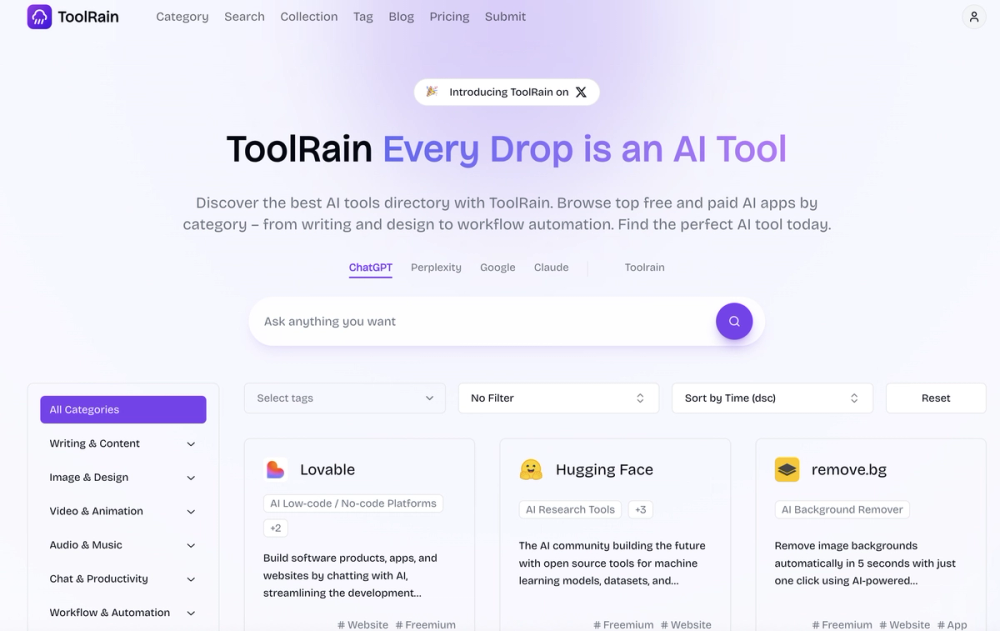
That’s exactly why I built Toolrain.
How I Use Toolrain After Launching a New Site
Toolrain helps me:
- Discover backlink opportunities faster
- Find directories & platforms I would’ve missed
- Analyze competitors’ backlink sources
- Turn SEO research into actionable tasks, not spreadsheets
Instead of asking:
“Where else should I submit my site?”
I get a clear list of places to act on.
If you’re launching websites regularly (or even just one serious project), this saves an insane amount of time.
(No growth hacks. Just practical SEO execution.)
Final Thoughts
Backlinks are not about tricks anymore.
They’re about:
- Being visible
- Being useful
- Being mentioned in the right places
If you’ve just launched a website, don’t wait months hoping Google will “figure it out”.
Start small.
Be systematic.
And treat backlinks as part of building — not marketing.
If this helped you, feel free to reach out or follow me.
I regularly share what actually works when building and launching products.